Minority’s Afari Hospital Drama Backfires; Ghanaians Question NPP’s 8-Years in Power

What was intended to be a dramatic political statement by the New Patriotic Party (NPP) Minority over the abandoned Afari Military Hospital has instead triggered public backlash, with many Ghanaians questioning the party’s credibility on the issue after eight years in government without operationalising the facility.
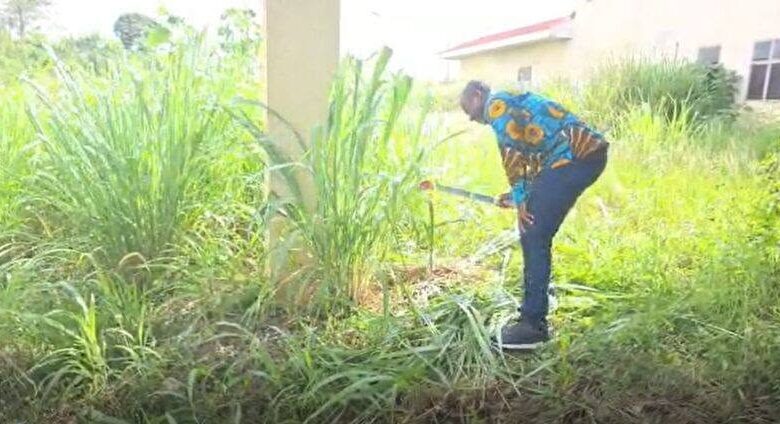
The backlash followed a visit by Parliament’s Health Committee to the hospital on Wednesday, June 10, during which the Deputy Ranking Member of the Committee and Member of Parliament for Obuasi East, Patrick Boakye-Yiadom, was photographed wielding a cutlass and clearing overgrown weeds around the facility.
The unusual spectacle, apparently aimed at highlighting the deteriorating condition of the hospital, quickly drew criticism from sections of the public who described the act as political theatre and an attempt to score cheap political points.
Mr. Boakye-Yiadom expressed outrage over the state of the hospital, lamenting that a facility built to serve the healthcare needs of residents in the Ashanti Region had been left overrun by weeds.
“I am very sad and disappointed today to see this beautiful edifice overtaken by weeds and, of course, snakes. That is why you saw me weeding. This shouldn’t continue. This spectacle must stop,” he told journalists.
He subsequently called on the Mahama administration to urgently operationalise the facility to help reduce pressure on the Komfo Anokye Teaching Hospital (KATH).
However, his comments have been met with sharp criticism, with many asking where the MP and his colleagues were when similar appeals were repeatedly made during the NPP’s eight years in office.
Leading the criticism was Executive Director of the Media Foundation for West Africa (MFWA), Sulemana Braimah, who suggested that some politicians appear to discover their patriotism only after losing political power.
In a Facebook post, Mr. Braimah noted that the Afari Military Hospital was initiated under former President John Dramani Mahama and remained largely unused throughout the tenure of the Akufo-Addo administration despite numerous calls for its operationalisation.
He questioned why Mr. Boakye-Yiadom, who has served in Parliament since 2021, failed to publicly champion the cause while his party controlled both the Executive and Legislature.
Mr. Braimah also recalled the troubling incident in 2022 when a journalist investigating the abandoned project was allegedly assaulted by military personnel stationed at the facility.
According to him, journalist Michael Aidoo was physically abused, forced to perform press-ups with a concrete block on his back, and had photographs deleted from his phone after attempting to document the state of the project.
He further disclosed that a petition submitted to then Defence Minister Dominic Nitiwul seeking investigations into the incident was ignored.
For many observers, the Minority’s sudden concern about the hospital raises uncomfortable questions about political consistency and accountability.
Critics argue that the same political actors who ignored persistent calls to operationalise the facility while in government cannot now portray themselves as champions of public healthcare after barely eighteen months in opposition.
While acknowledging that the demand for the hospital to become operational is legitimate, commentators insist that the Minority cannot escape responsibility for the years of neglect that left the project dormant.
Mr. Boakye-Yiadom also expressed concern about the completed but non-operational Agenda 111 hospitals at Kokoben and Trede, arguing that the facilities require only staffing to begin serving the public.
Yet critics maintain that his latest advocacy highlights a familiar trend in Ghanaian politics, where projects neglected in government suddenly become matters of national urgency once political power changes hands.
As debate over the Afari Military Hospital continues, many Ghanaians are demanding less political symbolism and more accountability from leaders whose actions in office often differ sharply from their rhetoric in opposition.