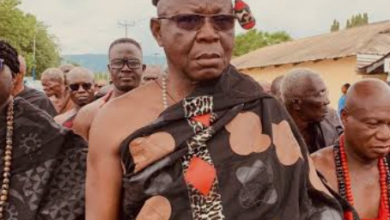
Free Sanitary Pad Policy Saving Vulnerable Girls From Teenage Pregnancy – Dr. Apaak

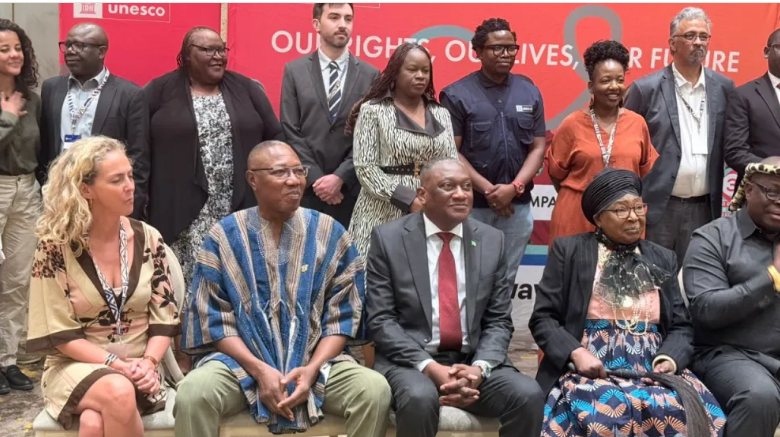
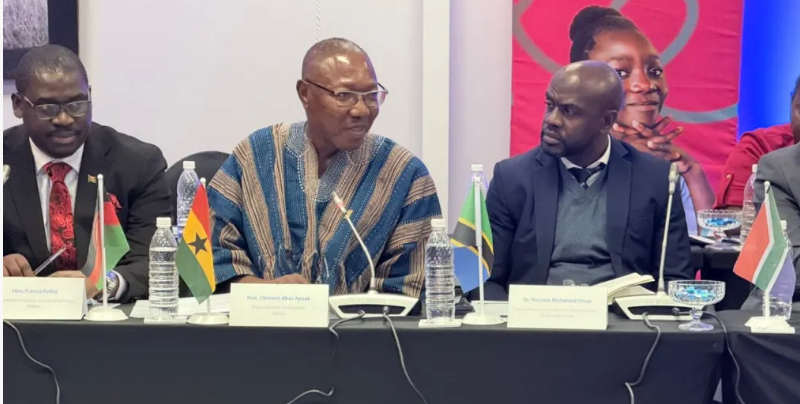
Deputy Minister of Education, Dr. Clement Apaak, has stated that the government’s free sanitary pad policy is helping to protect vulnerable schoolgirls from teenage pregnancy.
According to him, period poverty remains a hidden challenge that exposes many girls to unsafe relationships, particularly in families struggling to meet basic needs.
Speaking during a UNESCO ministerial dialogue in Livingstone, Zambia, Dr. Apaak said: “Poverty tends to be the trigger; it is the most important factor that can cause girls to become pregnant at a stage of their lives when they are not ready.”
He explained that many girls who cannot afford sanitary pads are sometimes compelled to enter transactional relationships with men and boys who offer to purchase the products for them.
“Because they cannot afford the pads, they turn to men and boys who promise to buy them these pads, they exchange, so it becomes transactional,” he explained.
Dr. Apaak said the government introduced the free sanitary pad policy to ease the burden on struggling families and protect girls from exploitation linked to menstrual hygiene needs.
He disclosed that since the implementation of the programme, more than 12 million packs of sanitary pads have been distributed to schoolgirls nationwide to help them remain in school comfortably.
“Since we took over the reins of governance, we introduced the free sanitary pad policy, which we have implemented. Last year, we procured and supplied 12.2 million packs of pads to all our girls from primary school to secondary school who need them,” he said.
Dr. Apaak emphasized that the programme would continue this year as part of broader efforts to improve girls’ welfare, reduce teenage pregnancy, and enhance school retention.
“We are just getting to the second year, and this year we are doing the same,” Dr. Apaak added.
Tackling Girl-Child Dropout
The Deputy Minister further disclosed that Ghana is increasingly relying on the support of chiefs and queen mothers to help keep girls in school and reduce dropout rates.
Addressing ministers and government representatives from across Sub-Saharan Africa, he said Ghana’s strategy for tackling school dropout among girls includes stronger collaboration with traditional authorities and local communities.
“So, we also engage the traditional leaders, the chiefs,” Dr. Apaak said while outlining measures being implemented to support learners.
He noted that Ghana’s traditional leadership structures were being leveraged to deepen awareness about the importance of girls’ education and encourage communities to prioritize keeping girls in school.
“In Ghana, we have the national house of chiefs, which is at the national level. Then, you have the regional house of chiefs. And then, the traditional councils,” he stated.
Dr. Apaak said queen mothers were playing a particularly critical role in advocacy efforts focused on girls’ education.
“We also have the queen mothers’ organisation,” he noted.
“So, when it comes to girls in particular, I believe that the Queen Mothers are better suited. So, they take the lead, supported by the chiefs,” he added.
According to him, traditional authorities are complementing government efforts by engaging families and communities on the long-term benefits of educating girls.
“So, while we are doing all of this, we are also engaging the traditional authorities in educating them about the need to keep girls in school,” Dr. Apaak said.
The conference ended with ministers adopting a communiqué warning that Sub-Saharan Africa faces a growing “triple threat” of HIV, early and unintended pregnancy, and gender-based violence affecting millions of children and adolescents.
The communiqué noted that early pregnancy and child marriage continue to drive school dropouts and poor health outcomes across many African countries.
Participants pledged to strengthen school systems through safer learning environments, improved policies, and stronger partnerships involving governments, communities, parents, and traditional leaders.
“The future of Africa depends on whether we protect, educate, empower, and invest in our young people today,” the communiqué stated.