Troubling reports from Ghana’s Eastern Region point to a renewed surge in illegal mining activities inside the Atewa Forest Reserve, raising serious questions about the effectiveness of ongoing enforcement efforts.
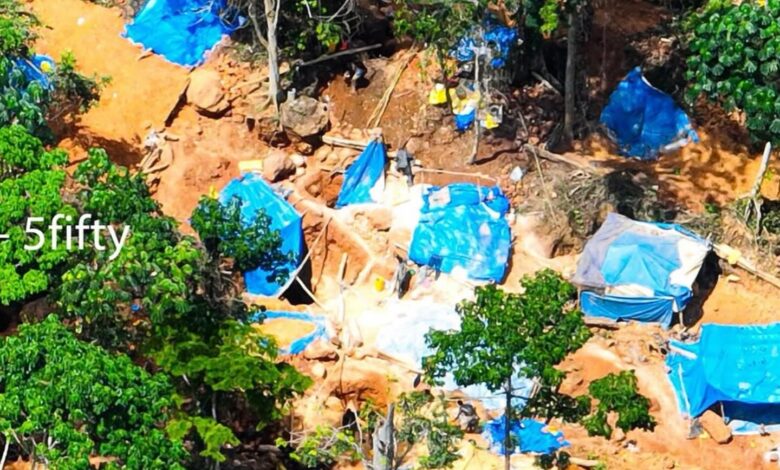
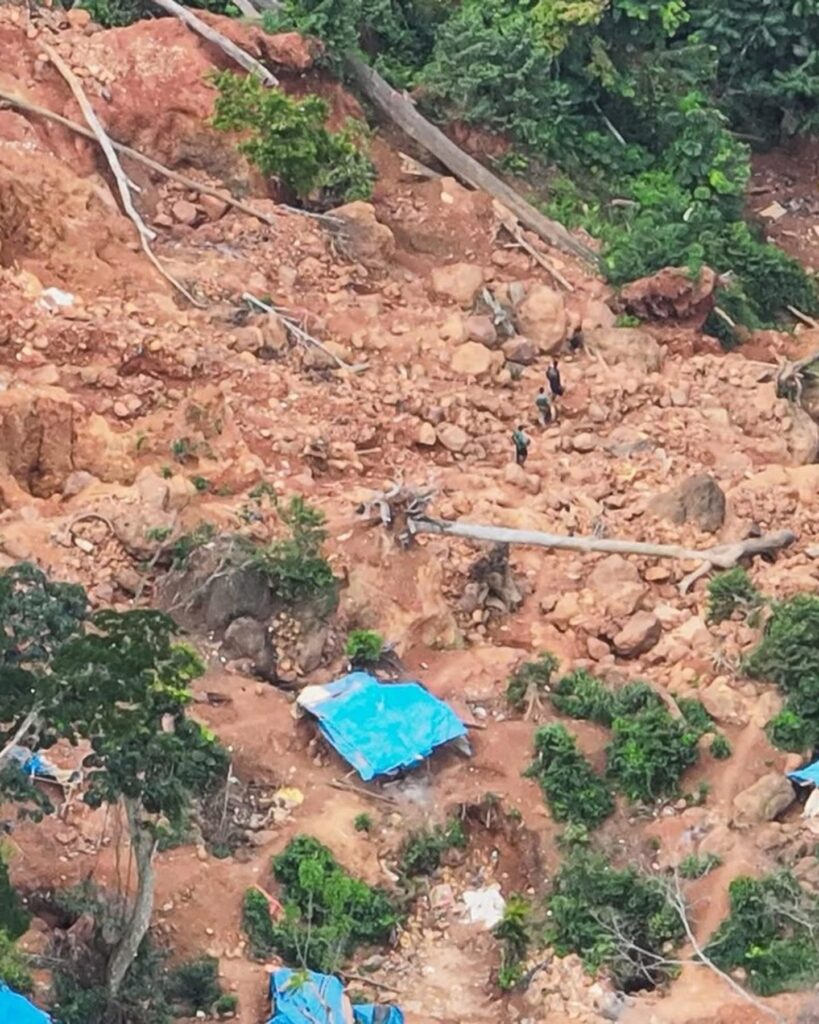
Photo evidence circulating online suggests that illegal miners, popularly known as “galamseyers,” have infiltrated deep into the protected forest and are operating with alarming boldness.
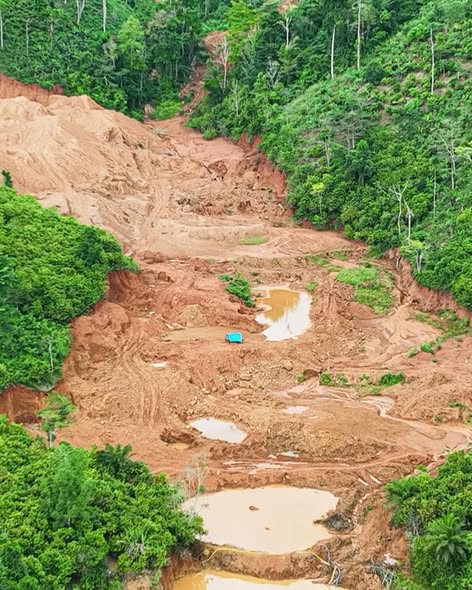
The images, shared by freelance journalist, Edem Srem Sai, depict extensive destruction of forest cover, with mining activities reportedly intensifying by the day with impunity.
The visuals show makeshift tents and semi-permanent camps erected within the reserve, indicating a level of organisation that challenges the narrative of sporadic illegal activity.
These developments suggest that miners are not only gaining access to the forest but are entrenching themselves with little apparent resistance.
Atewa Forest Reserve, one of Ghana’s last remaining upland evergreen forests, is a critical ecological zone.
It serves as the source of major rivers including the Ayensu, Densu, and Birim, as well as over 100 smaller streams that support millions of livelihoods.
Its degradation therefore poses a direct threat to national water security and biodiversity.
Although the claims captured in the images are yet to be independently verified, they mirror longstanding concerns raised by environmental groups about the growing sophistication and persistence of illegal mining operations in the Atewa landscape.
Recent reports indicate that some miners have established semi-permanent bases within the forest, enabling continuous operations often beyond the reach of routine patrols.
The consequences—deforestation, land degradation, and pollution of critical water bodies—are already evident.
Authorities, including the Forestry Commission, have in recent weeks announced joint operations that reportedly led to arrests and the destruction of mining equipment. However, the apparent re-emergence and expansion of these activities raise doubts about the sustainability and impact of such interventions.
Critics argue that the continued presence of galamseyers within a protected reserve exposes gaps in surveillance, enforcement, and political will.
The situation has reignited public frustration, with many questioning how illegal miners are able to establish camps and operate openly in a supposedly secured forest.
The latest developments have intensified calls for decisive and sustained action. Advocacy groups are demanding not just periodic crackdowns, but a comprehensive strategy that includes constant security presence, technological monitoring, and accountability for lapses in enforcement.
Without urgent and effective intervention, observers warn that the Atewa Forest Reserve risks irreversible damage, an outcome that could have far-reaching environmental and socio-economic consequences for the country.