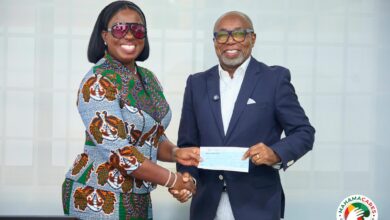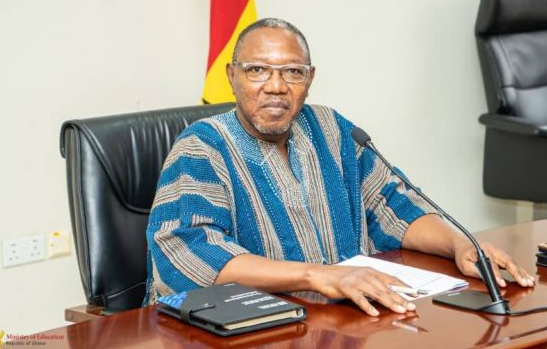
The Deputy Minister for Education, Clement Abas Apaak, has announced a 20 per cent salary top-up for teachers who accept postings to rural and deprived communities as part of efforts to address inequalities in Ghana’s education sector.
Speaking during a courtesy call by top awardees of the Basic Education Certificate Examination (BECE), Dr. Apaak said the incentive forms part of the government’s newly introduced ‘Teacher Dabre’ Programme, aimed at making rural postings more attractive.
Under the policy, teachers assigned to hard-to-reach areas will receive a 20 per cent increase on their gross salary, in addition to accommodation support.
“The President has a programme that is going to reward teachers who take teaching positions in rural areas. These teachers would get 20 per cent on top of their gross salary as a form of motivation,” Dr. Apaak said in a report by Citi Newsroom.
He explained that the measures, announced by President John Dramani Mahama during the State of the Nation Address, are designed to ensure that students in underserved communities have equal opportunities to excel as their counterparts in urban centres.
According to the Deputy Minister, the policy underscores the government’s commitment to improving teaching and learning outcomes at the basic education level while bridging longstanding disparities in resource allocation.
Gov’t to Build 600 Basic Schools
In a related development, Dr. Apaak disclosed that the government plans to construct 600 new basic school facilities nationwide to eliminate the persistent phenomenon of “schools under trees.”
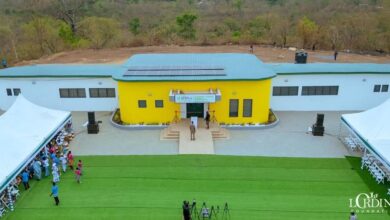
The initiative will include the construction of 200 junior high schools (JHS), 200 kindergarten (KG) blocks and 200 primary school blocks to address infrastructure deficits exacerbated by rapid population growth.
He noted that the current administration inherited more than 5,000 makeshift schools operating under trees and is taking deliberate steps to resolve the challenge.
“As I speak, there are many parts of the country where we have sufficient populations for schools to start, and because, as a state, we are not paying heed to population growth, the communities themselves come together and start a school, and that is how schools-under-trees come to be,” he said.
Dr. Apaak added that the commitment, reaffirmed in the State of the Nation Address and backed by provisions in the 2026 Budget, is aimed at creating safer and more conducive learning environments for pupils across the country.