Gwira Banso ‘Galamsey Headquarters’ Demolished
…After Major Operation; As NAIMOS Intensifies Multi-Region Crackdown

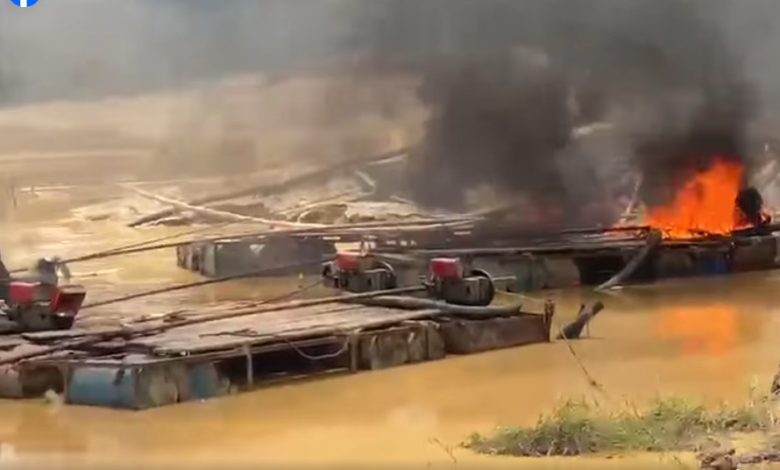
A major illegal mining enclave at Gwira Banso in the Western Region, widely labelled as a “headquarters” of galamsey activities, has been demolished following a large-scale enforcement operation.
The National Anti-Illegal Mining Operations Secretariat (NAIMOS), in collaboration with the Nzema East Blue Water Guards, carried out the intelligence-led operation along the Ankobra River last Sunday, March 1, 2026.
Gwira Banso has long been identified as a hotspot for illegal dredging on the Ankobra River and is regarded by many as a notorious flashpoint, with alleged backing from some powerful individuals in the area.
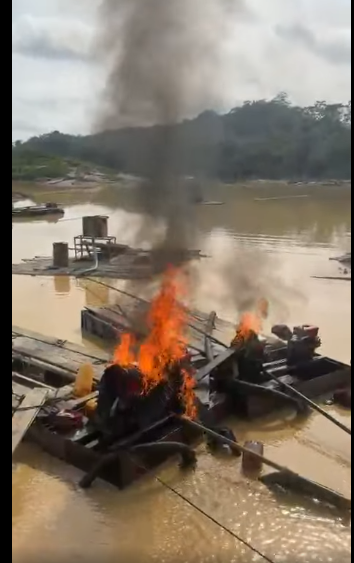
Upon arrival at the riverbank, the joint task force discovered multiple dredging platforms mounted with changfan machines positioned in the riverbed.
However, no operators were present at the site.
Preliminary intelligence from local sources suggested that the illegal miners had fled in anticipation of the task force’s arrival in a bid to evade arrest.
The team subsequently secured and dismantled all equipment found at the location.
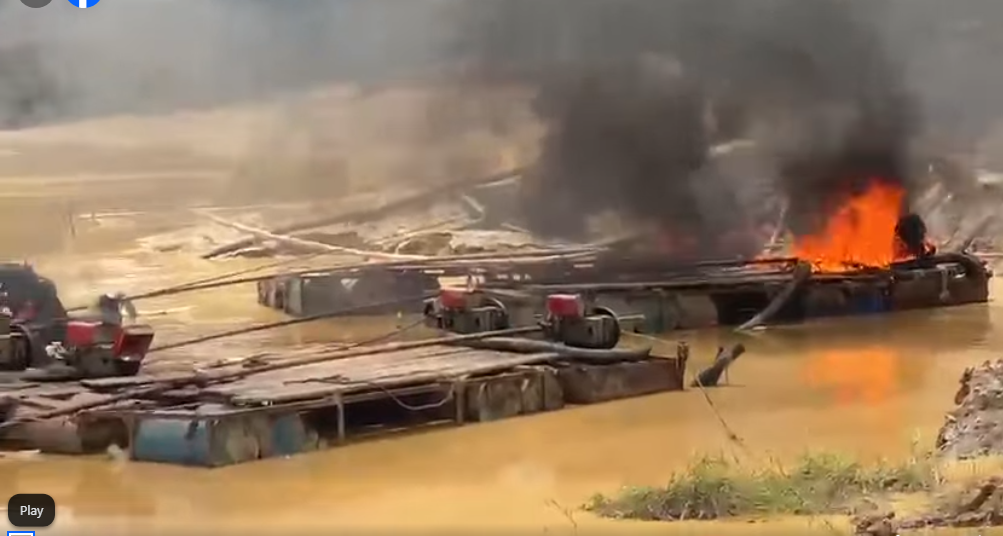
In accordance with enforcement protocols, the task force destroyed 52 dredging changfan platforms and 12 gold washing platforms.
A total of 66 changfan machines and four motorbikes used to facilitate the illegal activities were rendered inoperable through controlled burning.
Large quantities of bamboo structures used in constructing the dredging platforms, as well as water hoses and other auxiliary mining materials, were also destroyed to prevent their reuse.
The operation forms part of a sustained nationwide strategy to dismantle the logistics, equipment and infrastructure supporting illegal mining on Ghana’s water bodies.
The Ankobra River remains one of the hardest-hit rivers, having suffered significant pollution and ecological degradation due to unregulated dredging activities.
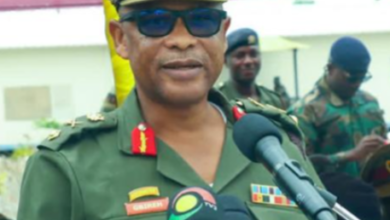
The Director of Operations at NAIMOS, Colonel Dominic Buah emphasised that collaboration with the Blue Water Guards reflects a strengthened community-based enforcement approach aimed at protecting critical water resources.
He indicated that the joint task force would maintain a continuous presence along the river to prevent the re-establishment of illegal mining operations.
The Secretariat reiterated the government’s commitment to restoring polluted rivers and safeguarding the environment for future generations.
It also called on residents in mining-prone communities to support ongoing operations by providing credible information on illegal activities.
No casualties or injuries were recorded during the operation.
NAIMOS assured the public that similar intelligence-driven raids would be intensified in other affected areas as part of broader efforts to eradicate illegal mining and preserve Ghana’s natural resources.
NAIMOS Intensifies Multi-Region Crackdown in E/R and C/R
In a related development, NAIMOS has intensified its nationwide crackdown on illegal mining, extending coordinated enforcement operations into parts of the Eastern and Central Regions as part of the fifth day of sustained action.
Acting on credible intelligence, a joint task force stormed a mining enclave within the Prankese area in the Kwabibirim District between 7:30 a.m. and 10:45 a.m. on Sunday.
Upon arrival, the team discovered that operators had vacated the site moments before the raid, apparently tipped off about the task force’s movements.
A thorough sweep of the area uncovered fresh excavator tracks leading into a nearby cocoa farm, where three heavy-duty excavators had been concealed among cultivated crops. One Sany excavator was retrieved and transported to Accra on a low-bed trailer.
Two others — a Liugong and an XCMG machine — were immobilised on-site after essential components, including monitors and control boards, were removed to prevent relocation.
The task force also destroyed five water pumping machines, gold-trapping carpets, yellow jerricans and other mining equipment. The operation ended without injuries.
Birim River
NAIMOS also conducted a follow-up reconnaissance and enforcement exercise along the Birim River at Takrowase to prevent illegal miners from resuming operations along the riverbanks and within the water body.
Several miners fled across the river upon sighting the task force.
Operatives dismantled and destroyed 56 chanfan machines, five water pumping machines and several improvised boats used as floating mining platforms.
The Secretariat noted that despite previous interventions, some operators continue to attempt re-entry into cleared areas.
Later, at about 4:30 p.m., the task force moved to Assin Asamang near Assin Kushea in the Assin Central District, where it raided an active mining enclave spanning nearly one square kilometre. An estimated 60 illegal miners abandoned the site as officers approached.
A comprehensive sweep led to the discovery of 11 excavators.
Six had already been disabled by their operators, while the remaining five — two Sany machines, one XCMG, one Shantui and one Zoomlion excavator — were immobilised by the task force through the removal of monitors, control boards and pilot oil pumps due to the unavailability of low-bed transport.
Additionally, one metallic gold-washing platform was demolished using on-site machinery. Fifteen makeshift structures, 13 motorbikes, three heavy-duty multipurpose pumps and 16 standard water pumping machines were also destroyed.
Road construction foremen working in the enclave reported deliberate sabotage of a bridge and a major road project under construction.
According to the crew, illegal miners had repeatedly intimidated workers and obstructed progress, raising serious safety concerns. The construction team expressed relief at NAIMOS’ intervention.
Preliminary findings from the operations indicate severe pollution of the Birim River and the River Pra caused by the direct discharge of mining waste.
The Secretariat further observed that illegal mining activities have escalated beyond land degradation to include interference with public infrastructure.