Ex-Officials Mess: COCOBOD Crisis Deepens As Debt Hits GH¢30 Billion
…Labour Union Begs Gov’t to Write Off Debt, Inject Capital


The Ghana Cocoa Board (COCOBOD) has been plunged into a staggering GH¢30 billion debt, a situation industry players say has exposed the cocoa sector to the brink of collapse.
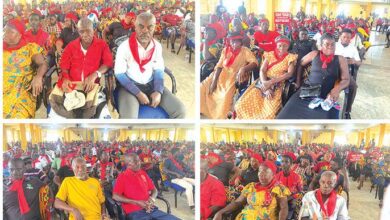
The Industrial and Commercial Workers Union (ICU) is now urging the government to swiftly write off the debt and inject fresh capital to save the country’s most critical agricultural export sector.
Insiders blame the crisis on what they describe as the poor management and incompetence of officials under the erstwhile Akufo-Addo-led New Patriotic Party (NPP) administration, particularly former Chief Executive Joseph Boahen Aidoo and former Agriculture Ministers Dr. Owusu Afriyie Akoto and Bryan Acheampong.
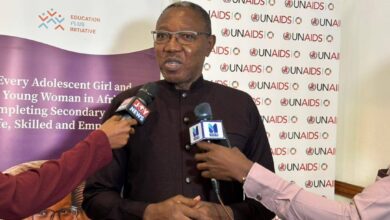
Speaking in an interview on TV3 in reaction to the government’s 2026 Budget Statement, ICU General Secretary Morgan Ayawine stressed that COCOBOD urgently needs recapitalisation to return to stability and regain its global prominence.
“What COCOBOD needs is capital injection to reclaim its glorious position as the leading producer of cocoa in the world. Writing off COCOBOD’s debt and recapitalising the institution will put it on the right pedestal to boost production,” he said.
Ayawine acknowledged government’s renewed commitment to revamp the sector but cautioned against placing blame solely on Ghana.
He argued that debt accumulation has become a global trend across industries and should not be interpreted as a uniquely Ghanaian failure.
“Every sector globally is bedevilled with issues such as debts, so when we hear that COCOBOD has debts, it should not be taken as though COCOBOD alone is at fault,” he noted. “What government needs to do is to see the importance of Ghana COCOBOD and take pragmatic steps to halt its decline.”
Union Welcomes Land Acquisition Plan
The ICU welcomed the announcement by Finance Minister Dr. Ato Forson regarding government’s plan to acquire over 200,000 hectares of land next year to expand cocoa cultivation.
Ayawine described the initiative as a “bold decision” that will support COCOBOD’s long-standing ambition of producing one million metric tonnes of cocoa.
“If government is able to acquire the 200,000 hectares to boost production, there will be no doubt that COCOBOD is moving towards achieving its one million metric tonnes target,” he said.
However, Ayawine expressed concern over the Produce Buying Company’s (PBC) inability to secure funding for the ongoing main crop season, which typically begins in October.
He warned that without the necessary operational capital, cocoa purchasing could be severely disrupted, threatening both farmers’ livelihoods and market stability.
ICU Wants Support for
Distressed Banks, Industries
Beyond the cocoa sector, the ICU commended government for fully recapitalizing the National Investment Bank (NIB), noting that earlier proposals for a merger with the Agricultural Development Bank (ADB) had been shelved following further discussions.
“We need to escalate this support to other banks that are in distress,” Ayawine added.
The union also questioned the feasibility of the government’s target to create 20,000 new jobs in the textiles and garments sector.
According to Ayawine, the priority should be reviving collapsed or distressed factories before establishing new ones.
“The textiles and garments sector used to have about 40 companies. Today, we are talking about three or four, and even these are not functioning well. Thousands of workers are at home,” he lamented.
“If government intends to set up new companies, we believe the old factories should be revived to complement them.”