Bagbin’s Enviable Record, Reputation on the Line
…Over Failure To Punish Errant MPs; Senyo Hosi Insists Disorder Reflects Poorly On Speaker

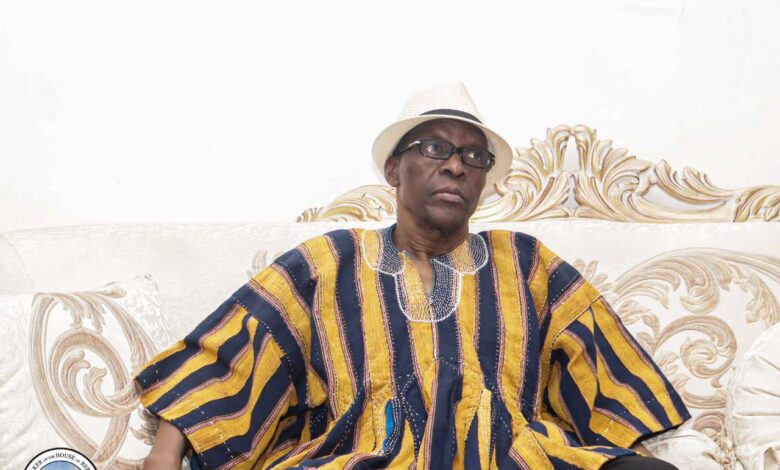
The long-standing credibility and reputation of the Speaker of Parliament, Rt. Hon. Alban Sumana Kingsford Bagbin, are increasingly under scrutiny as public frustration mounts over his perceived failure to decisively sanction Members of Parliament (MPs) involved in repeated acts of disorder in the House.
Recent scenes of chaos, open defiance of parliamentary authority and, in some cases, physical confrontations among MPs have reignited debate about discipline in Ghana’s Parliament and the Speaker’s willingness to enforce the Standing Orders without fear or favour.
Despite clear constitutional and procedural provisions empowering the Speaker to name, suspend or refer errant MPs to the Privileges Committee, critics argue that sanctions have either been delayed or entirely absent—emboldening indiscipline and eroding the dignity of the House.
To date, Parliament under the leadership of Speaker Bagbin has not sanctioned MPs involved in the recent disruption of ministerial vetting proceedings, during which state property was vandalised in full public view and on live television.
Although the identities of those involved are widely known and a committee was constituted to investigate the incident, the public is yet to be informed of the committee’s findings, and no individual has been held accountable.

Equally troubling, Parliament has also failed to identify the MP responsible for referring to Dr. Zanetor Agyemang-Rawlings as “the daughter of a murderer” during proceedings.
Addressing the House on March 4, 2025, Speaker Bagbin condemned the remark as deeply offensive, reckless and unjustifiable, stressing that such language was incompatible with the standards of civility and mutual respect expected in Parliament.
He indicated at the time that a formal investigation had begun to identify the MP responsible, noting that the matter would be referred to the Committee of Privileges and the Committee on Ethics and Standards once the culprit was identified.
However, more than seven months later, and despite the presence of CCTV cameras throughout the Chamber, no individual has been held responsible—prompting public speculation about selective enforcement of parliamentary discipline and whether errant MPs are being shielded, while ordinary citizens face swift sanctions for similar conduct.
Critics argue that had such remarks or actions been made by a private citizen, Parliament would likely have invoked contempt proceedings and imposed punishment.
“Parliament has become unnecessarily rowdy because there are no consequences. If the Speaker does not act firmly, the institution risks losing its moral authority, no matter how experienced he is,” a governance expert also told The ARCHIVES.
Disorder Reflects Poorly On Speaker
Mr. Senyo Hosi, Convener of the OneGhana Movement and a Trustee of the Ghana Coalition Against Galamsey, has also criticised the Speaker over what he describes as persistent disorder in the legislature, which he believes reflects weak leadership and a culture of impunity.
Speaking on JoyNews’ Newsfile on Saturday, December 13, Mr. Hosi questioned the lack of accountability following major incidents in Parliament.
“Look at what happened during the vetting of the Chief Justice. Has there been accountability since then? Where is it?” he asked. “They set up a committee—where did that end?”
“Because they know we will talk about it for one week, two weeks, and it dies. That is the kind of Parliament we are nurturing,” he added.
According to Mr. Hosi, the recurring disorder reflects leadership failure at the highest level of Parliament, insisting that the Speaker bears ultimate responsibility for maintaining discipline and shaping parliamentary culture.
“Frankly, it is telling on the leadership we are getting from Honourable Bagbin,” he said.
He warned that Speaker Bagbin, who is widely believed to be serving his final term, risks ending his tenure on a negative note if decisive steps are not taken to restore order.
“He should be bringing proper order to a Parliament with many new members, shaping the culture of governance for posterity. We are not getting that from him as Speaker,” Mr. Hosi stated.
Other civil society groups have echoed similar concerns, warning that selective enforcement of parliamentary rules—often perceived along partisan lines—undermines public confidence in the legislature.
“Ghanaians expect Parliament to be a house of reason, not a boxing arena,” civil society activist Mr. Kojo Dey told The ARCHIVES.
“When MPs misbehave and go unpunished, it sends a dangerous signal that the law applies differently to political elites.”
Mr. Dey argued that MPs involved in recent disruptions—including Assin South MP Rev. Ntim Fordjour, who was seen throwing a pile of papers at the Speaker—should be individually identified and sanctioned to serve as a deterrent.
The controversy carries broader implications for Ghana’s democracy, particularly at a time when public trust in state institutions is declining. Observers warn that continued inaction could permanently stain the Speaker’s legacy.
As pressure mounts from citizens and governance advocates, many believe the moment calls for firm leadership and decisive action to restore discipline and protect the sanctity of Parliament.
Speaker Bagbin, a former Majority Leader and one of the longest-serving MPs of the Fourth Republic, has long been praised for his mastery of parliamentary procedure and commitment to democratic values.
However, analysts argue that experience alone cannot shield him from criticism if order continues to deteriorate under his watch.