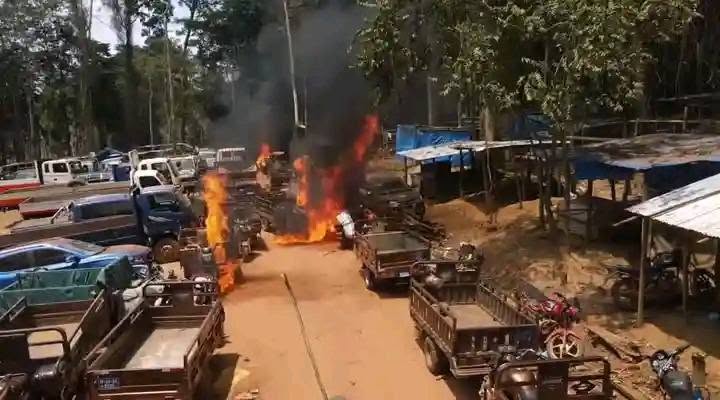
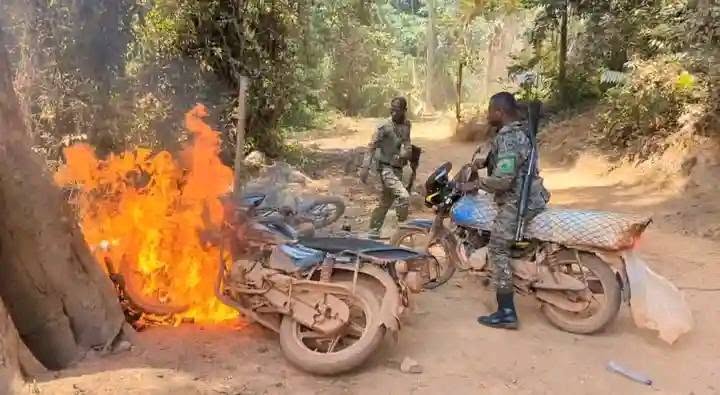
A taskforce of the Forestry Commission’s Forest Services Division (FSD) has set ablaze several vehicles, motorbikes, tricycles and other equipment belonging to suspected illegal miners during an operation in the Subri River Forest Reserve at Wassa Essamang in the Western Region.
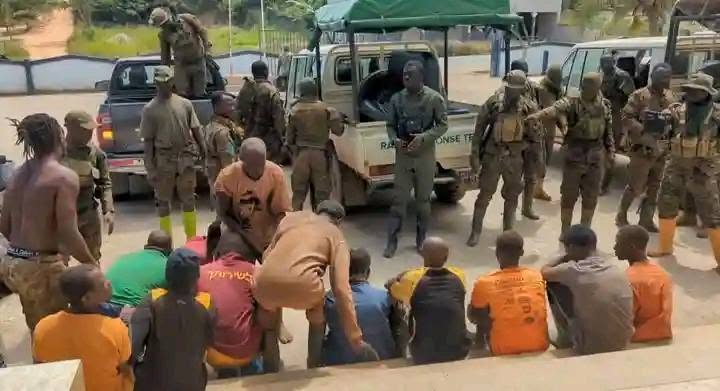
The operation, reportedly conducted on Saturday, October 17, also led to the arrest of 20 suspects.
However, videos circulating on social media showed several vehicles and other equipment engulfed in flames, sparking public concern over the destruction of property that could potentially have been seized by the state.
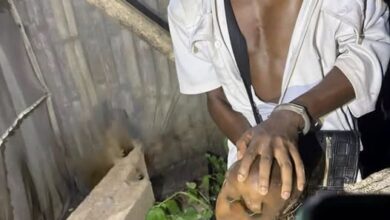
The footage, cited by The Archives, also showed a structure at the site being consumed by fire. Some of the arrested miners, including women, were seen subjected to beatings and other forms of inhumane treatment during the operation.
Addressing a news conference at the Takoradi Forest District Office in October, the Western Regional Manager of the FSD, Nana Poku Bosompem, described the situation in the Subri River Forest Reserve, particularly the Wassa Essamang enclave, as volatile.
He classified the area as a “red zone” and a no-go area for forestry officials because of the security risks posed by illegal miners.
Mr Bosompem said a team of fewer than 30 rapid-response personnel encountered fierce resistance during the operation, forcing them to retreat after mobs blocked access roads, wielded machetes and deployed what he described as “spiritual fortifications”.
He likened the scale of activity in the reserve to that of a busy port or a Driver and Vehicle Licensing Authority (DVLA) office, with hundreds of vehicles, trucks and motorbikes operating in the forest.
“It is a representation of ECOWAS,” he said, adding that people from different backgrounds, including foreign nationals, had besieged the area.
The FSD uses a colour-coded system to assess threats in forest reserves. Green zones are areas controlled by forest guards; yellow zones require rapid-response support; orange zones indicate massive incidents requiring larger teams; while red zones are considered highly dangerous and potentially armed areas where forestry officials cannot operate safely.
Mr Bosompem said the Commission had succeeded in clearing major illegal mining hubs, including the Almighty enclave, but miners continued to return to the affected areas.
He also dismissed reports alleging complicity by some security personnel in illegal mining, insisting that the Commission remained focused on its enforcement mandate.
“We hear stories that officers are beneficiaries. We don’t care about the rumours. We are focused on the mission,” he said.
‘We Will Unleash Full Force’
Mr Bosompem issued a stern warning to illegal miners operating in Wassa Essamang and surrounding communities, declaring that the Commission would intensify its operations to reclaim the affected forest reserves.
“Your 15 minutes of freedom is over. The days of frustrating forest officers are over. We are going to unleash the full force of the state and that of the Forest Commission in the coming days,” he warned.
He cautioned that equipment left in the reserves would be destroyed during subsequent operations, describing the planned crackdown as a “disaster of epic proportions” for those engaged in illegal mining.
“We are never, ever going to cede even one square metre of our forest reserves to miners. Retreat is not defeat; it is a phase in war. We will regroup and come back stronger,” he added.
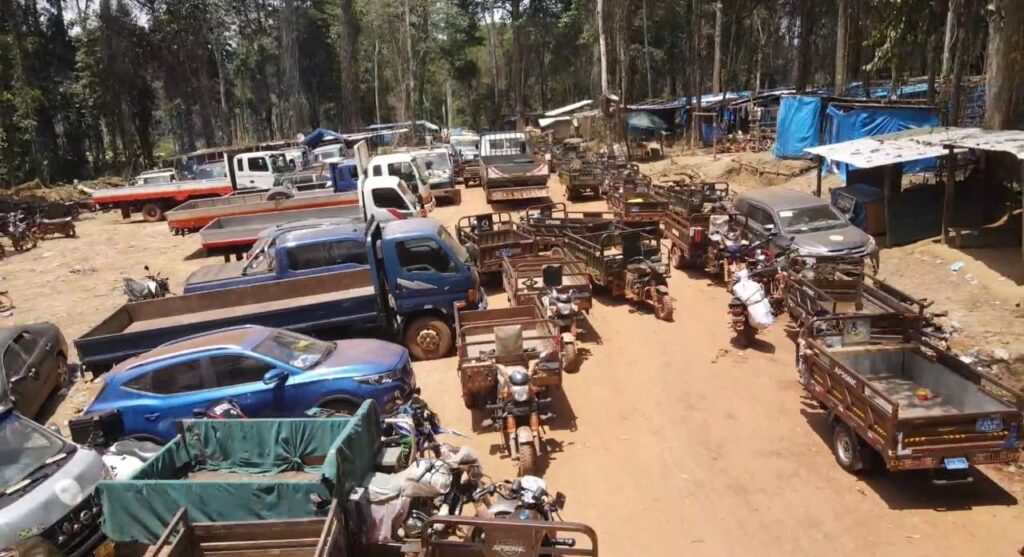
The Commission is seeking stronger collaboration among state security agencies, particularly the military and police, to dismantle heavily fortified illegal mining camps that have become a major security concern in the Western Region.
Seven Reserves Under Threat
Mr Bosompem disclosed that the Western Region has 19 forest reserves spread across three districts—Tarkwa, Asankragua and Juaboso—covering a combined area of 209,333 hectares.
The region is also home to the country’s only wet evergreen forest, located in the Ankasa Conservation Area.
He said seven of the 19 forest reserves had been affected by illegal mining, resulting in the destruction of an estimated 1,533 hectares of forest land.
According to him, some illegal mining activities take place beneath the forest canopy, making the damage difficult to detect from the surface.
“Some of the mining is done under the canopy. You go in at a standard distance and see nothing; it appears intact. But when you go underneath, that is when you see trenches,” he explained.
The FSD has intensified enforcement efforts, resulting in 36 cases involving 159 suspects arrested between January and September this year pending before the Tarkwa Circuit Court.
GH¢28m Worth of Equipment Destroyed
Mr Bosompem said the Commission had managed to prevent the entry of heavy machinery into the reserves and immobilised three excavators during the period.
However, he noted that illegal miners had adapted by increasingly relying on smaller machines and other equipment to continue their operations.
“From January to September ending, a total of 1,103 Changfa machines have been burnt,” he disclosed. “Just this weekend alone, over 40 more were destroyed.”
He estimated the cost of each Changfa machine at approximately GH¢20,000, suggesting that the machines destroyed between January and September alone were worth about GH¢22.06 million.
The figure excludes the additional machines destroyed during the October 17 operation and other equipment seized or destroyed during the crackdown.
Mr Bosompem further disclosed that 1,422 industrial pumping machines and 387 temporary structures had been destroyed during the same period as part of efforts to disrupt illegal mining activities in the forest reserves.