No Student from 15 SHSs in Volta Qualifies for Tertiary
… As 18 Out of 68 Schools Record Zero Qualification in 2025 WASSCE

At least 18 senior high schools (SHSs) and senior high technical schools (SHTSs) in the Volta Region recorded a zero per cent qualification rate in the 2025 West African Senior School Certificate Examination (WASSCE), with no candidate from the affected schools meeting the benchmark for progression to tertiary education.
The schools are among 68 public senior high schools covered by performance statistics from the Ghana Education Service (GES).
The data show that the affected schools recorded zero candidates obtaining A1–C6 in all four core subjects—English Language, Core Mathematics, Integrated Science and Social Studies—under the stated progression benchmark.
The schools listed include Atiavi SHTS, Dzolo SHS, Ziavi SHS, Afadjato SHTS, Leklebi SHS, Some SHS, Weta SHTS, Santa Esther Girls SHS, Shia SHTS, Gbekor SHS, Mafi Kumase SHTS, Kpeve SHTS, Ave SHS, Tanyigbe SHS and Akome SHTS.
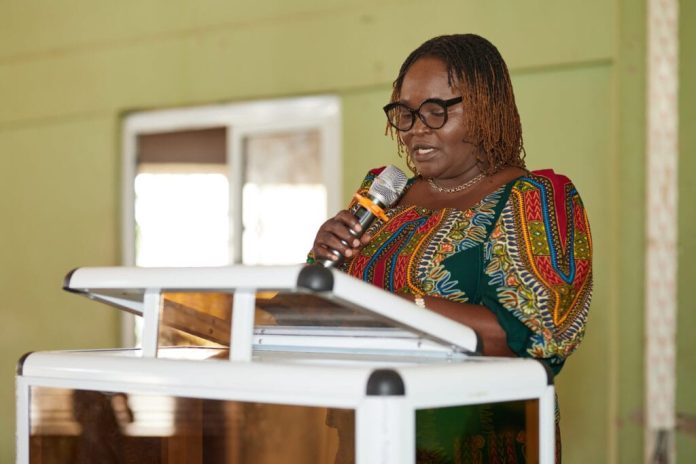
Acting Volta Regional Director of Education, Mrs Marian Jemima Adzroe, expressed concern about the poor performance of schools in the 2023, 2024 and 2025 WASSCE during a recent three-day educational clinic at Sokode-Lokoe, near Ho.
She said the trend posed a threat to education in the region and prompted the directorate to organise the clinic to find practical solutions to the declining performance.
Mrs Adzroe said the Regional Directorate of Education could not overlook the downward trend after analysing performance in the core subjects, which revealed systemic challenges across a significant number of schools, particularly in Core Mathematics and Integrated Science.
She disclosed that 18 out of the 68 SHSs and SHTSs in the region recorded zero per cent qualification in the 2025 WASSCE.
She said nine schools recorded one per cent, while 27 others recorded less than 12 per cent progression in the examination.
According to her, the most worrying aspect was that some schools with historically strong academic records had also experienced a severe decline in performance.
She described the situation as more than a statistical setback, saying it represented a compromised future for thousands of young people in the region.
The figures mean that entire graduating cohorts in the affected schools had no candidate who met the stated four-core-subject benchmark for tertiary progression.
For instance, Some SHS had 485 candidates, while Mafi Kumase SHTS registered 430 candidates, yet both recorded zero qualifying candidates under the benchmark.
At the other end of the scale, Santa Esther Girls SHS, with 22 candidates, and Volta SHS, with 35 candidates, also recorded zero qualification.
Only 15.32% Qualify
The poor performance was not limited to the schools that recorded zero qualification.
Across the 68 public senior high schools, a total of 26,544 candidates sat the 2025 WASSCE, but only 4,067 candidates, representing 15.32 per cent, obtained A1–C6 in all four core subjects.
The figure comprised 1,964 males, representing 16.17 per cent, and 2,103 females, representing 14.61 per cent.
Subject-level results also showed significant weaknesses, particularly in Core Mathematics and Integrated Science.
In English Language, 16,053 candidates, representing 60.50 per cent, obtained A1–C6.
For Social Studies, 10,140 candidates, representing 38.23 per cent, achieved the same grade range.
In Integrated Science, only 9,512 candidates, or 35.93 per cent, obtained A1–C6.
The weakest performance was recorded in Core Mathematics, where only 6,618 candidates, representing 24.99 per cent, obtained A1–C6.
This means that fewer than one in four candidates achieved A1–C6 in Core Mathematics.
39 Schools Record Below 5%
The school-level distribution further underscores the scale of the challenge.
Of the 68 public senior high schools assessed, 39 schools—about 57 per cent—recorded qualification rates below five per cent.
Another seven schools recorded qualification rates between five and nine per cent, while nine schools fell within the 10–19 per cent bracket.
Seven schools recorded rates between 20 and 29 per cent, four achieved between 30 and 39 per cent, and one school fell within the 40–49 per cent range.
The results point to particularly difficult outcomes in Core Mathematics and Integrated Science, with regional performance in the two subjects trailing the corresponding national results.
Questions Over Learning Outcomes
The results are likely to renew concerns about the factors contributing to the low progression rates, including teacher availability, teaching and learning materials, laboratory facilities, student preparedness and academic support.
The implications could be significant for students who fail to meet the requirements for tertiary progression, particularly those from communities with limited access to alternative educational and skills-training opportunities.
The performance also places renewed focus on the effectiveness of interventions designed to improve learning outcomes under Ghana’s Free Senior High School programme.
Education authorities are expected to examine the school-by-school results and identify the factors behind the poor performance, particularly in schools where entire cohorts recorded no qualifying candidates.
With only 15.32 per cent of candidates meeting the four-core-subject progression benchmark and 39 of the 68 schools recording qualification rates below five per cent, the 2025 WASSCE results present a significant challenge for education stakeholders in the Volta Region.