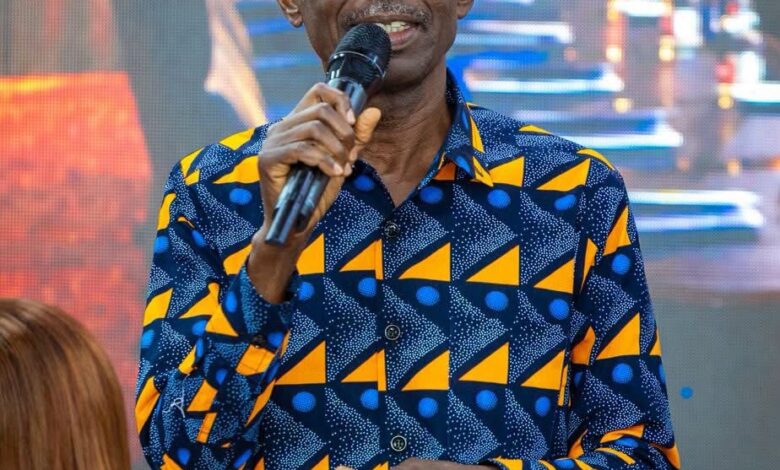
National Chairman of the National Democratic Congress (NDC), Johnson Asiedu Nketia, has identified election-related violence as Ghana’s biggest threat, warning that the country’s democratic gains could be reversed if political actors and state institutions fail to protect them.
He said although Ghana had demonstrated that peaceful transfers of political power were possible in Africa, the country could not afford to become complacent about the threats confronting its democracy.
Mr Asiedu Nketia made the remarks at the 2026 Goodluck Jonathan Foundation Democracy Dialogue in Bauchi, Nigeria, on Tuesday, August 11, 2026, held under the theme: “Beyond Elections: Can Political Parties and the Judiciary Save African Democracy?”
He said Ghana’s experience under the Fourth Republic, which has witnessed nine consecutive general elections since 1992, provided important lessons for democratic development across Africa.
According to him, four of the elections—in 2000, 2008, 2016 and 2024—resulted in peaceful transfers of power between political parties, demonstrating that an African governing party could lose power, hand over authority peacefully and later return to government through the ballot box.
However, Mr Asiedu Nketia cautioned that the country’s democratic record should not create a false sense of security, particularly in view of violence associated with elections.
8 Lives Lost in 2020
He cited the 2020 general election as a warning that Ghana’s democratic progress remained vulnerable.
Although the election produced a peaceful parliamentary outcome, with the two major parties securing 137 seats each and one independent member holding the balance, Mr Asiedu Nketia noted that eight people reportedly lost their lives through election-related violence.
“This reminds us that democratic progress is never irreversible,” he said.
He stressed that Ghana’s democratic credentials should not be measured solely by the conduct of elections, but also by the behaviour of political actors and institutions before, during and after elections.
Close Contests
Mr Asiedu Nketia also cited the 2008 presidential election as an example of how political actors and institutions could prevent a highly competitive election from degenerating into a national crisis.
Professor John Evans Atta Mills won that election with 50.23 per cent of the vote against 49.77 per cent for Nana Addo Dankwa Akufo-Addo, with the difference between the two candidates being less than one percentage point.
He said the ability of political leaders, institutions and citizens to manage such a close contest peacefully constituted an important democratic achievement.
He further cited the 2016 election, when then-President John Dramani Mahama conceded defeat and supervised a peaceful transfer of power to the incoming administration.
He said the 2024 election provided another example, with then-Vice-President Mahamudu Bawumia conceding before the formal declaration after his party’s collation indicated that the result could not be overturned.
“These concessions were not ceremonial courtesies; they were constitutional contributions,” Mr Asiedu Nketia said.
Democracy Beyond Elections
The NDC Chairman said elections merely determined who received the authority to govern and did not automatically guarantee that power would be exercised within constitutional limits.
He said the real test of democracy occurred between elections, when governments made decisions, state institutions exercised their powers and citizens demanded accountability.
“Democracy is therefore tested not only on election day, but in every decision taken between one election and the next,” he said.
Mr Asiedu Nketia called for stronger cooperation among political parties, electoral bodies, the judiciary, civil society organisations, the media and academic institutions to identify and address potential political crises before they escalated.
He urged stakeholders not to wait until an election dispute threatened national stability before engaging in dialogue.
He also called for stronger internal democracy within political parties, greater inclusion and measures to reduce the financial barriers to political participation.
According to him, the future of African democracy would depend not merely on conducting elections, but on building institutions that make elections meaningful, governments accountable, constitutional limits effective and peaceful transfers of power the norm.
He said Ghana’s democratic experience offered valuable lessons to other African countries, but warned that the country itself must continue to protect and strengthen its democratic institutions.