PNC’s Bernard Mornah Defends Sole-Sourcing Under ‘Big Push’
…Says Procedure Should Not Suffocate Progress

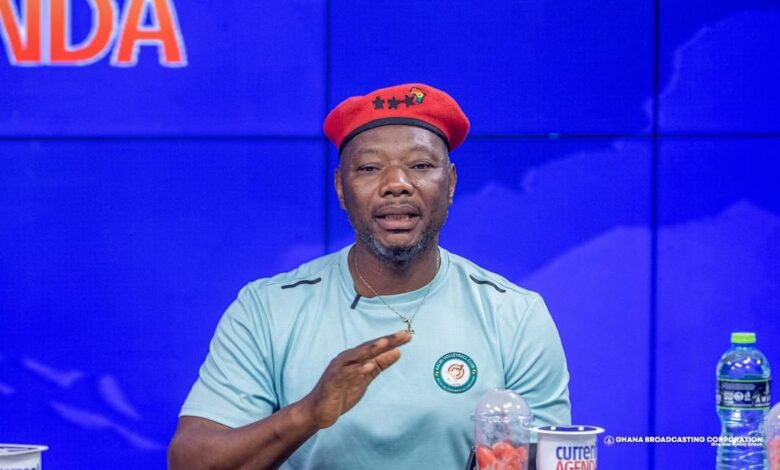
Former Chairman of the People’s National Convention (PNC), Bernard Mornah, has defended the government’s decision to adopt sole-sourcing under the “Big Push” infrastructure agenda, insisting that procedural delays must not hinder urgent national development.
His comments follow recent publications by The Fourth Estate that raised concerns about the initiative.
Speaking on the matter in a Facebook post, Mornah said Ghana is at a critical stage where swift and decisive action is required to address the country’s longstanding infrastructure deficit, particularly in the road sector.
According to him, the “Big Push” agenda, spearheaded by former President John Mahama, represents a $10 billion commitment aimed at tackling key infrastructure challenges.
“The issue is not whether Ghana needs roads—we all agree on that. The real question is whether we have the urgency and clarity of purpose to deliver them,” he stated.
Mornah noted that the demand for improved road networks cuts across all sectors, affecting urban and rural communities alike, with farmers, traders, and commuters bearing the brunt of poor infrastructure.
While acknowledging the importance of competitive tendering in public procurement, he argued that rigid adherence to lengthy procedures could delay critical projects.
“No serious country develops by allowing procedure to suffocate progress,” he said, adding that sole-sourcing remains a legal and constitutionally permitted option under Ghana’s Public Procurement Act in cases of urgency.
Addressing concerns about potential abuse, Mornah conceded that risks exist but maintained that no concrete evidence has been presented to substantiate allegations of wrongdoing in the “Big Push” contracts.
He also criticised some opposition figures and civil society groups, including The Fourth Estate and the NPP Minority, describing their analyses of road project costs as overly simplistic.
“Reducing complex engineering projects to simple cost-per-kilometre calculations is not accountability—it is intellectual laziness,” he argued.
Mornah explained that factors such as terrain, soil conditions, drainage requirements, and road type significantly influence construction costs and must be considered in any credible evaluation.
He further called on the media to uphold high standards of integrity and factual reporting, stressing that public discourse should be guided by evidence rather than sensationalism.
“Ghanaians are not interested in noise—they want results,” he said.
He urged stakeholders to strike a balance between accountability and efficiency, warning that delays in project execution come at a high cost to ordinary citizens.
“Every delay affects livelihoods—from farmers who cannot transport produce to workers who spend hours on poor roads,” he noted.
Mornah concluded by calling for measured scrutiny of the initiative, encouraging critics to present evidence where wrongdoing is suspected while allowing progress to continue in the absence of such proof.
“If there is wrongdoing, let it be proven. If not, let the work continue. Ghana cannot wait,” he said.