The contractual integrity of Zipline Ghana’s drone delivery service has been challenged by Minister of Health Kwabena Mintah Akandoh, who revealed that the multi-million-dollar scheme is predominantly being used to transport non-emergency items, including condoms and school textbooks, rather than lifesaving supplies to hard-to-reach areas.
Speaking at the Government Accountability Series on Monday, December 1, 2025, the minister presented data showing that the service has largely strayed from its core mandate, raising serious concerns about the value for money the government is receiving, especially amid reports of a colossal GH¢174 million debt owed to Zipline.
The Zipline medical drone delivery service in Ghana, spearheaded by former Vice President Dr. Mahamudu Bawumia, was first introduced in 2017 and became actively operational in 2020.
The original contract for Zipline was focused on two critical areas: serving hard-to-reach areas and providing emergency medical services.
However, the minister’s review exposed a drastic diversion from this core mission.
“The services were to concentrate on hard-to-reach areas and emergency services, but upon review of the activities, the hard-to-reach areas constitute only 12% of their activities, and emergency services constitute only 4% of their activities,” he said.
This means a staggering 84% of Zipline’s operations fall outside the scope of its intended hard-to-reach or emergency services.
Mr Akandoh detailed a list of common items being flown by the expensive drone service, arguing that many could be transported more cheaply and efficiently via traditional logistics channels.
“It will interest you to know some of the items they fly. Items like condoms, blood-donor cards, mosquito nets, food and nutrition items, adhesive tapes, syringes and needles, education materials like textbooks and uniforms, among other things.”
The revelation that non-emergency items like school uniforms, textbooks, and common contraceptives are being delivered by drones intended for vital blood and vaccines has fueled public criticism of government spending on the contract.
The minister’s comments come at a time of severe operational and financial strain for the service:
- Debt Crisis: Zipline is reportedly owed an outstanding GH¢174 million by the government, a debt crisis that has already led to the closure of three of its operational centres.
- Engagement for Value: Mr. Akandoh confirmed that the government is actively engaging the provider over the ballooning range of services and the outstanding financial obligations, emphasizing the need for cost efficiency.
“We think that there must be value for money, therefore we are engaging them,” he said.
The controversy has drawn fierce political opposition, most notably from Majority Leader Mahama Ayariga, who has previously called for the full termination of the contract, describing the drone delivery scheme as a “mismanagement of public funds” that has consistently failed to provide demonstrable value for the considerable investment.
Cancellation Not Yet Decided
The Minister of Health, Kwabena Mintah Akandoh, confirmed on Monday, December 1, 2025, that the government is engaged in ongoing discussions with drone delivery service Zipline Ghana regarding the future of their critical medical supply contract.
The minister stressed that, despite public scrutiny and parliamentary pressure, a decision on whether to terminate the partnership has not yet been reached.
Addressing the media during the government’s routine Accountability Series, which provides updates on national projects and policy decisions, Mr Akandoh acknowledged the intense debate surrounding the service’s utility and cost-effectiveness.
When pressed on whether the government would yield to calls to cancel the contract, the minister maintained a stance of careful deliberation, noting that the engagement process is still active.
“Whether or not to cancel Zipline, we have not gotten to that point yet. We are still engaging them. When we get there, you will hear what decision we will take.”
He also directly addressed the public and political debate surrounding the issue, confirming that all stakeholders, including elected officials, are free to voice their concerns.
“I mean, everybody has the right to also express his or her opinion, including members of parliament.”
His comments follow Zipline’s decision to ground its drones at three key hubs as state debt soared to GH¢175m.
The 2026 budget allocated only GH¢20 million to Zipline, which is insufficient to cover the outstanding amount.
The suspension affects services at three key centres (Sefwi Wiawso, Krachi, and Anum).
This will disrupt the delivery of essential medical supplies like blood, vaccines, and medicines to communities in the Western North, Volta, Eastern, and other affected regions.
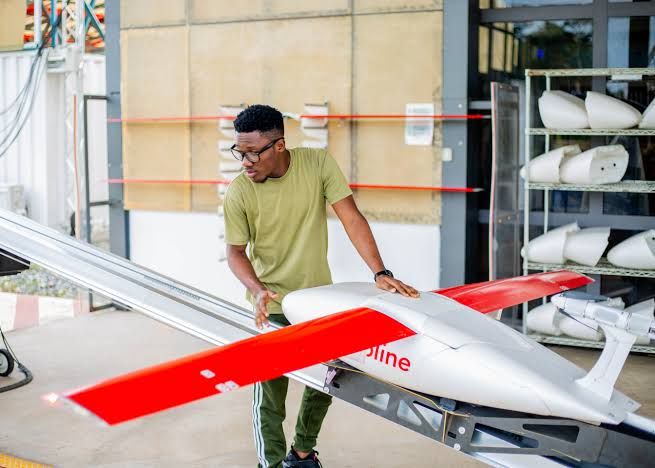
The Zipline partnership, launched in Ghana in 2019, utilises autonomous drones to deliver essential medical supplies—including blood products, vaccines, and emergency medicines—to remote health facilities, particularly in hard-to-reach areas.
Ghana was one of the first countries in Africa to fully integrate this sophisticated technology into its national healthcare logistics chain.